



Behaviour at Marwood
Behaviour Curriculum September 2026.pdf
Our approach
At Marwood Primary School, we believe that positive behaviour is taught, practised and celebrated. We want every child to feel safe, respected and ready to learn. Our approach is built around strong relationships, clear routines and high expectations to help all children thrive.
We teach and reinforce our SMART rules throughout the school day. These rules were developed by our pupils and help everyone understand what excellent behaviour looks like:
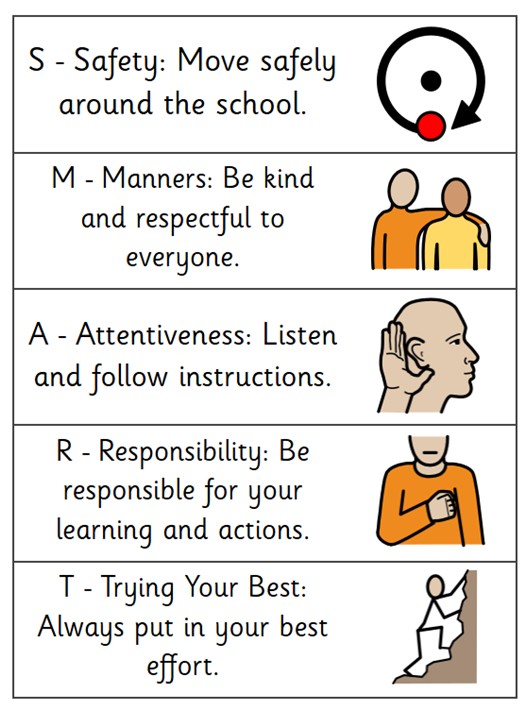
S - Safety
Move safely around the school.
M - Manners
Be kind, respectful and considerate to others.
A - Attentiveness
Listen carefully and follow instructions.
R - Responsibility
Take responsibility for your learning, actions and belongings.
T - Trying Your Best
Show effort, perseverance and pride in everything you do.
SMART behaviours (e.g. walking quietly in corridors) are taught explicitly during the first week of the Autumn Term and revisited regularly throughout the year. Staff model these expectations and provide opportunities for children to practise them in classrooms, assemblies, lunchtimes and around the school.
Celebrating positive behaviour
We believe that recognising positive choices encourages children to repeat them. Children may be recognised through:
- Verbal praise and encouragement
- Golden Tickets
- SMART Spotter Awards (for following the SMART rules)
- Star of the Week certificates
- Perfect Presentation certificates
- Headteacher stickers
- Positive conversations and communication with parents and carers

Excellent examples of behaviour, effort and learning are celebrated during our weekly achievement assembly on Fridays.
When children need support with behaviour
All children make mistakes from time to time. When this happens, we use a calm and consistent step-by-step approach designed to help children reflect, learn and make better choices.
Step 1: Reminder
A member of staff gives a calm reminder of the expected behaviour and provides the child with an opportunity to correct it.
"Remember our SMART rule about attentiveness. Thank you for showing me good listening."
Step 2: Warning
If the behaviour continues, the child receives a clear warning that they need to make a different choice.
Staff explain:
- Which behaviour needs to change
- Which SMART rule has not been followed
- What will happen if the behaviour continues
Step 3: Consequence
If the behaviour continues, a reasonable and proportionate consequence may be applied. This might include:
- Moving to a different seat
- Working in another classroom for a short period
- Missing part of a playtime or lunchtime
- A discussion with a senior leader
- Contact with parents or carers
Consequences are always intended to support learning and help children take responsibility for their actions.
Restoring relationships
After an incident, we use restorative conversations to help children understand the impact of their actions and repair relationships.
Children are encouraged to think about:
- What happened?
- Who has been affected?
- How can the situation be put right?
- What can be done differently next time?
This helps children develop empathy, responsibility and positive relationships with others.
Additional support
Some children may require extra support to help them regulate their emotions or behaviour. In these cases, we work closely with families and, where appropriate, the SENDCo and external professionals to ensure the right support is in place.
Support may include:
- Individual behaviour targets
- Relational support plans
- Sensory or movement breaks
- Calm corners
- Zones of Regulation approaches
- Co-regulation strategies
- Regular reviews with parents and carers
Our aim is always to understand the reasons behind behaviour and provide support that helps every child succeed.